A normal switch is often called a SPST (or Single Pole Single Throw) switch
Symbol for a SPST (Single Pole Single Throw) switch:
Switch OPEN………. current cannot flow – bulb OFF
Switch CLOSED……current can flow – bulb ON
Other types of switches:
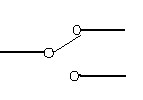
SPDT: Single Pole Double Throw:
The SPDT switch is used when you want to switch between one device and another.
eg A SPDT switch is used to switch on lamp A or lamp B
A SPDT switch can be used in a home so that a light can be switched on or off from two switchesHere both switch A and switch B will turn the lamp on or off
The Reed Switch A reed switch consists of a narrow glass tube containing two thin contacts (or reeds), one of which is movable.
The contacts contain iron so when a magnet is brought near the tube the contacts become magnetised and are pulled together.
Circuit showing a reed switch in useWhen a magnet is brought near the reed switch the bulb turns on.
We could use this to show us when a door or a window is closed.
Use for a reed switch:
Reed switches are used a lot in burglar alarms. The reed switch will be in the door frame with the magnet in the door.
Providing the door is closed there will be a complete circuit.
If the door is opened the magnet moves away from the switch thus breaking the circuit.
(A relay could then switch on the alarm)
The Relay
A relay consists of two parts:
i. A coil of wire that acts as an electromagnet
ii. Contacts that are pulled together by the electromagnet
When an electric current flows through the coil it causes the relay contacts to close (or open).
The relay contacts can be any kind of switch (SPDT, DPDT etc) although a reed relay will usually be just a simple (normally open) SPST switch.
Example 1
Using a relay to operate a buzzer When light falls on the Light Dependent Resistor its resistance gets lower allowing more current (from cell A) to flow through the coil.
This causes the relay contacts (in circuit B) to close allowing a current to flow through the buzzer.
Example 1
Starting a car
The starter motor of a car draws a very high current. This means that very thick wires are used to connect it to the car battery.
When the ignition switch of a car is turned it allows a small current to flow through the relay coil coil. This closes the relay contacts allowing a large current to flow through the thicker wires to the starter motor.